
Confused by cosmeceutical vs. cosmetics? The difference is easier to understand than it sounds.
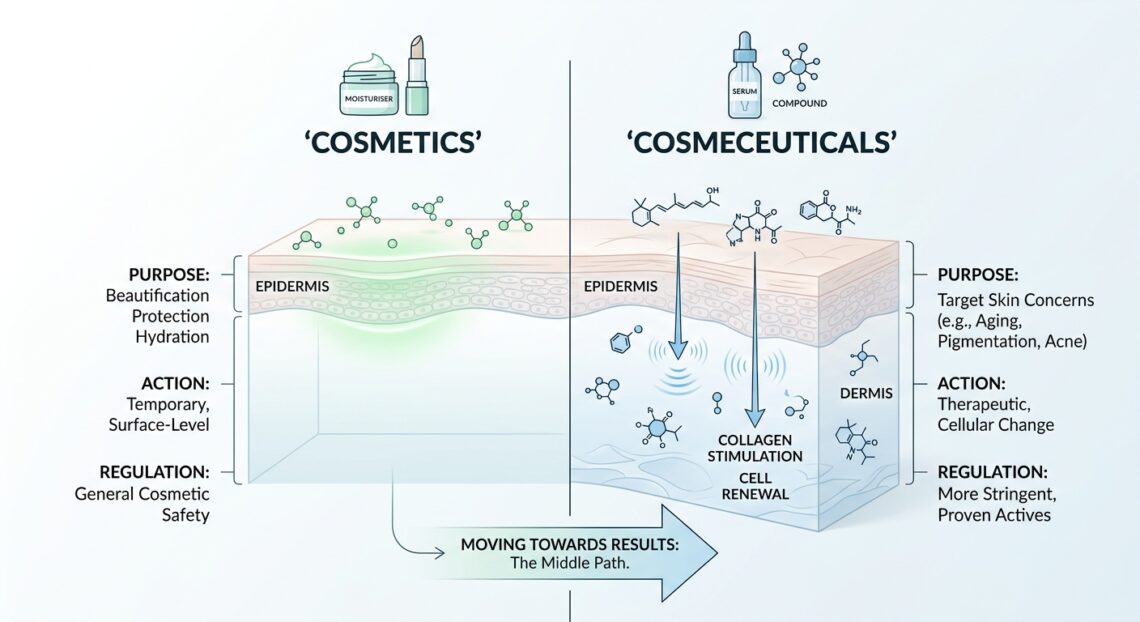
Cosmetics are mainly used to cleanse, moisturize, protect, or improve the appearance of your skin. “Cosmeceutical” is a beauty-industry term often used for skincare products that contain active ingredients and are marketed for more targeted skin concerns.
In this simple guide, we’ll explain the difference. We’ll look at common skincare ingredients, and we’ll help you choose products based on your skin goals. The focus is cosmeceutical vs cosmetics.
What Are Cosmetics?
Cosmetics are products mainly used to cleanse, moisturize, protect, or improve the appearance of the skin. They are often designed for everyday skincare and beauty routines.
- Common uses: Cleansing, moisturizing, softening, and improving appearance
- Examples: Facial cleansers, moisturizers, body lotions, face masks, makeup, and lip balms
- Typical role: Daily care and maintaining comfortable-looking skin
What Are Cosmeceuticals?
Cosmeceuticals vs cosmetics is a term from the beauty industry and marketing, not a formal legal category in the United States.
It is commonly used for skincare products that combine cosmetic use with active ingredients aimed at specific skin concerns.
Regulation and meaning can vary by country and by the claims made for a product.
Common ingredients linked to cosmeceutical vs cosmetics include Vitamin C, Niacinamide, Retinol, Hyaluronic Acid, AHAs, BHAs, and Peptides.
The important point is that the label cosmeceutical does not automatically mean a product is stronger, safer, or more effective.
Look at the ingredients, formulation, product claims, and your own skin needs.
Cosmetics vs. Cosmeceuticals: What’s the Difference?
| Feature | Cosmetics | Cosmeceuticals |
|---|---|---|
| Main purpose | Everyday cleansing, moisturizing, and beauty | Often marketed for more targeted skin concerns |
| Ingredients | May focus on cleansing, hydration, texture, or appearance | Often feature active skincare ingredients |
| Examples | Cleanser, moisturizer, body lotion, makeup | Targeted serum, exfoliating treatment, active skincare |
| Important note | Product claims and regulations vary by market | “Cosmeceutical” is not a formal legal category in the U.S. |
Which One Should You Choose?
There is no need to choose one label over the other. Your routine can include both. Start with your skin type, your main concern, and the ingredients that fit your routine.
- For dry skin: Look for Hyaluronic Acid, Glycerin, and Ceramides.
- For oily or blemish-prone skin: Niacinamide and Salicylic Acid are common ingredients to explore.
- For dull-looking skin: Vitamin C, Niacinamide, and AHAs are popular choices.
- For signs of aging: Retinol, Peptides, and Vitamin C are commonly used in targeted skincare.
Why Explore Thai Skincare?
Thai skincare has become popular with people looking for practical beauty products made for warm, humid weather. Many Thai formulas focus on lightweight textures, comfortable daily use, botanical ingredients, and familiar active ingredients such as Vitamin C and Niacinamide.
If you are exploring skincare from Thailand, focus on the ingredient list, product instructions, and your own skin needs rather than choosing a product simply because it is labeled “cosmeceutical.”
Frequently Asked Questions
Are cosmeceuticals better than cosmetics?
Not necessarily. The label does not guarantee better results. Ingredients, formulation, product quality, and how well the product fits your skin all matter.
Is cosmeceutical a medical term?
It is generally a beauty-industry term rather than a formal product category. Regulatory definitions can vary between countries.
Can I use active skincare ingredients every day?
It depends on the ingredient and your skin. Follow the product instructions and introduce stronger active ingredients gradually if needed.
What should I look for when choosing skincare?
Start with your skin type and main concern, then check the ingredients, product instructions, and formulation. A simple routine is often easier to maintain consistently.

One thought on “The Ultimate Guide to Cosmeceuticals vs Cosmetics for Skin”
Comments are closed.