
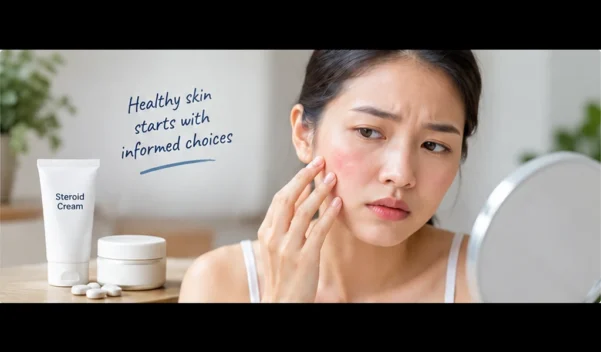
Topical corticosteroids are effective medicines for reducing inflammation in conditions such as eczema, dermatitis and psoriasis. When people use steroids on facial skin, the treatment should be appropriate for the condition, strength and recommended duration. Facial skin is relatively thin and can absorb topical steroids more readily than some other areas, so prolonged or inappropriate use can increase the risk of local side effects.
What Are Steroids Used for on the Face?
When people talk about “steroids” in skincare, they are often referring to topical corticosteroids. These are anti-inflammatory medicines rather than cosmetic ingredients. A healthcare professional may prescribe them to calm inflammation, itching and redness caused by certain skin conditions.
The strength of a corticosteroid matters. Stronger products generally have a greater potential for side effects, especially when they are used on sensitive areas such as the face. The NHS advises that some potent steroid treatments should not be used on the face unless a doctor has specifically recommended them. For broader skincare context, see our guides on cosmeceuticals and cosmetic products and a gentle skincare routine for sun-damaged skin.
How Can Steroids Affect Facial Skin?
Using a topical corticosteroid correctly does not automatically mean that skin damage will occur. The risk depends on factors such as the medicine’s potency, how often it is applied, how long it is used, and where it is applied.
- Skin thinning: Prolonged use of potent topical steroids can cause skin atrophy, making the skin more fragile and sometimes making small blood vessels more visible.
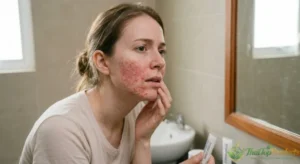
- Acne-like breakouts: Steroids can trigger or worsen acne-like eruptions in some people.
- Redness and visible blood vessels: Continued inappropriate use may contribute to persistent redness, telangiectasia (small visible blood vessels), or steroid-related rosacea.
- Periorificial dermatitis: A steroid used around the mouth, nose or eyes can contribute to an acne-like inflammatory rash known as periorificial dermatitis.
- Changes in skin color: Changes in pigmentation can occur with some topical corticosteroid treatments or with the underlying skin condition itself. A change in color should not automatically be assumed to be caused by the steroid.
Why Is the Face More Sensitive?
Facial skin is thinner than many other areas of the body, and topical medicines can be absorbed more readily through thinner skin. DermNet notes that potent topical steroids can cause side effects on the face more quickly than on thicker skin such as the palms and soles. The eyelids are especially delicate and require particular caution.
What About Steroid Withdrawal?
Some people who have used moderate- or high-potency topical corticosteroids frequently and for a prolonged period may develop a rebound reaction after stopping. DermNet describes topical corticosteroid withdrawal as uncommon and associated mainly with prolonged use of stronger steroids. Symptoms can include burning, itching, redness, scaling, swelling, papules or pustules.
These symptoms can also overlap with a flare of the original skin condition, so it is not always possible to identify the cause from symptoms alone. If your facial skin becomes significantly worse after stopping a steroid, speak with a doctor or pharmacist rather than restarting or changing treatment on your own.
How to Use Facial Steroids More Safely
- Use a topical corticosteroid only for the condition it was recommended to treat.
- Follow the prescribed strength, amount and frequency.
- Do not assume that a stronger steroid will produce better long-term results.
- Avoid using a steroid cream as a general-purpose treatment for acne, pigmentation or skin whitening unless a healthcare professional has advised it.
- Be especially careful around the eyelids and other thin areas of facial skin.
- If you have been using a steroid regularly for a long time, ask a healthcare professional how and when to stop rather than changing the treatment yourself.
When Should You Seek Professional Advice?
Consider speaking with a doctor or dermatologist if you have persistent facial redness, burning, acne-like bumps, visible small blood vessels, thinning skin, or a rash that repeatedly returns when you stop using a steroid. These symptoms can have several possible causes, and an accurate diagnosis is important before choosing a treatment.
Key Takeaway
Topical steroids can be useful medicines for inflammatory skin conditions, but they are not risk-free. The main concern on the face is inappropriate or prolonged use, particularly with stronger corticosteroids. Using the appropriate product under professional guidance can help balance the benefits of treatment with the risk of side effects.
Sources and Further Reading
- DermNet NZ: Topical steroids (corticosteroid creams)
- NHS: Common questions about betamethasone for skin
- American Academy of Dermatology: Corticosteroids for psoriasis
- DermNet NZ: Topical corticosteroid withdrawal
Medical note: This article is for general educational purposes and is not a substitute for diagnosis or individual medical advice. If you are using a prescription steroid, follow the instructions provided by your healthcare professional.